Indiana House committee advances House Bill 1002 utility ratemaking changes focused on affordability and service reliability
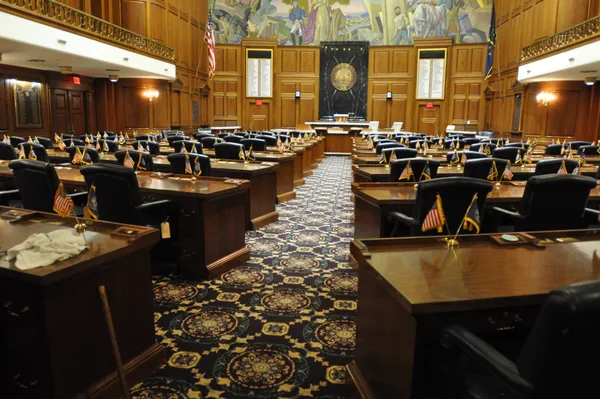
Committee vote sends utility ratemaking proposal to the next stage
An Indiana House committee has advanced House Bill 1002, a wide-ranging proposal that would change how certain electric utilities set rates and how residential customers are billed. The measure cleared the House Utilities, Energy and Telecommunications Committee on Tuesday, Jan. 20, 2026, and is expected to move to consideration by the full House.
The bill is framed around electric affordability and would pair customer-billing requirements with a shift toward multi-year rate plans overseen by the Indiana Utility Regulatory Commission (IURC), the state agency that regulates investor-owned utility rates and service.
Automatic “levelized” billing, with opt-out and more frequent reconciliation
HB 1002 would require electricity suppliers under IURC jurisdiction to apply a budget-style billing plan to residential accounts that do not already have one, beginning with the first monthly billing cycle after June 30, 2026. The bill also requires utilities to give customers a way to opt out at any time without penalty by April 1, 2026.
The measure further directs that, by July 1, 2026, any such plan must reconcile account balances at least twice per calendar year, a provision intended to reduce the chance that customers face a large catch-up bill after long periods of estimated or smoothed payments.
Shutoff restrictions tied to extreme heat warnings
The legislation would prohibit residential electric disconnections on days when an extreme heat warning is in effect within a utility’s service area, but only for customers determined eligible for the state’s energy assistance program during the same calendar year. If service is terminated after an extreme heat warning has been issued and remains in effect, the bill requires restoration as soon as practicable and bars resuming termination until the warning ends.
Multi-year rate plans and performance incentives
A central provision would require investor-owned electricity suppliers to petition the IURC for approval of basic rate changes through a three-year, multi-year rate plan. Under the proposal, first-year base rates would be set through a traditional rate-setting approach, while the second and third years would use current or forward-looking data adjusted to reflect the utility’s actual Indiana financial performance using the most current available data.
HB 1002 also creates performance metrics and incentive mechanisms that can result in financial rewards or penalties tied to utility performance. The bill specifies a customer affordability metric and requires two service restoration metrics, along with methods the IURC must use to calculate the metrics and determine associated incentives.
- Default residential levelized billing after June 30, 2026, with opt-out by April 1, 2026
- At least two reconciliations per year for levelized billing plans
- Heat-related shutoff protections for energy-assistance-eligible households
- Mandatory three-year rate plans for investor-owned electric utilities, plus affordability and restoration performance mechanisms
Low-income customer assistance program requirement
The bill would require regulated electricity suppliers to offer a low-income customer assistance program no later than July 1, 2026, providing monthly bill-payment support for eligible residential customers. The measure also outlines funding parameters, including a requirement—where applicable—that utilities allocate at least 50% of certain energy-efficiency-related lost revenues to the assistance program.
Next steps: With committee approval secured on Jan. 20, 2026, the proposal moves forward in the legislative process, where lawmakers can consider amendments and debate implementation timelines and oversight details.