Indiana’s 2024 population growth exceeded most neighboring states, with immigration driving the largest gains since 2008
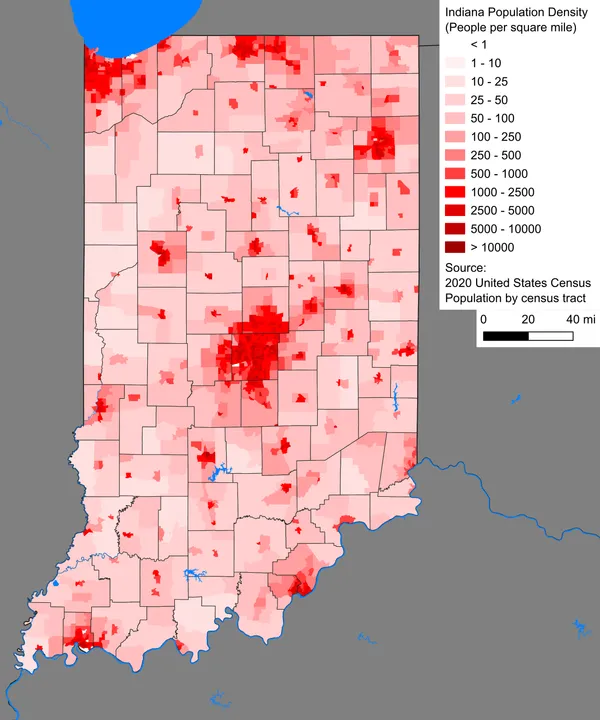
Indiana adds residents faster than nearby states in the latest Census estimates
Indiana’s population rose to an estimated 6,924,275 residents as of July 1, 2024, an increase of 44,144 people from the prior year. That year-over-year gain translates to roughly 0.64% growth, placing Indiana ahead of several Midwestern neighbors on the same measure and above the national median pace observed across states in recent years.
The 2024 increase also marked Indiana’s largest single-year population gain since 2008, reflecting a shift in the state’s demographic drivers compared with much of the 2010s, when growth was steadier and often slower. The latest figures come from the U.S. Census Bureau’s annual population estimates program, which updates state totals using births, deaths and migration data.
How Indiana compares with neighboring states
In 2024, Indiana’s growth rate outpaced Michigan, Illinois, Ohio and Wisconsin, based on the Census Bureau’s July 1, 2023 to July 1, 2024 estimates. Kentucky posted a higher rate than Indiana over the same period, underscoring that growth patterns varied across the region rather than moving uniformly.
- Indiana: +44,144 residents (about +0.64%) to 6,924,275
- Regional comparison: Indiana grew faster than Michigan, Illinois, and Ohio in 2024; Kentucky grew faster than Indiana
- Longer-term context: from April 1, 2020 to July 1, 2024, Indiana’s population increased by about 2.0%
Immigration emerges as the primary engine of growth
Components-of-change analyses for 2024 indicate that net international migration accounted for the majority of Indiana’s population increase. Net domestic migration was positive but comparatively small at the statewide level, while the balance of births and deaths contributed a smaller share than migration in the most recent year.
Net international migration represented roughly seven in ten of Indiana’s net population increase in 2024.
For the Indianapolis metro area, estimates similarly show population growth tied strongly to in-migration, with international migration accounting for a substantial portion of the region’s net gains since the pandemic years. Analysts tracking the demographic profile of metro counties have noted that the state’s most consistent recent expansion is concentrated in and around larger employment centers, even as some rural counties have recorded net in-migration in recent years.
Why the trend matters for planning and services
Population growth affects workforce availability, housing demand, school enrollment, transportation use, and state and local tax bases. Because the 2024 increase is heavily migration-driven, year-to-year totals may be more sensitive to national and global migration patterns than in periods when natural increase (births minus deaths) played a larger role.
The Census estimates will be updated in subsequent annual releases, which can revise the time series back to 2020 as new data and methods are incorporated.