West Indianapolis residents seek traffic signal at 10th Street and West Park Way after near-collisions
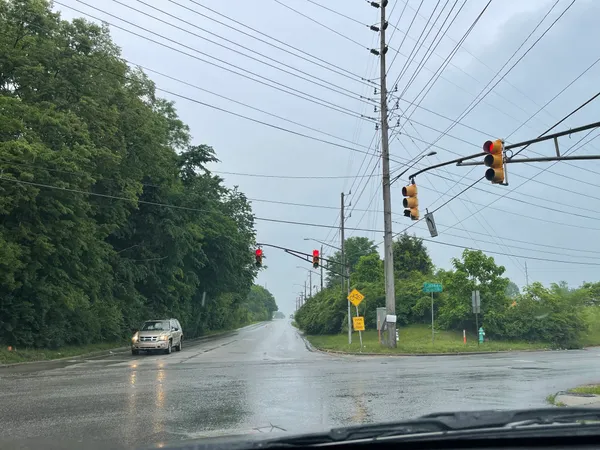
Near head-on encounters renew focus on west-side intersection safety
An Indianapolis woman who lives and works near the intersection of West 10th Street and West Park Way says two recent near head-on collisions have intensified concerns about safety and access at the west-side crossing. The intersection sits near apartment complexes with frequent vehicle movements throughout the day, creating repeated turning and merging conflicts as drivers attempt to enter or cross 10th Street.
The resident described regularly seeing crashes or near-crashes and said she has reported concerns through the city’s service channels. She and other nearby residents are asking for a traffic signal, arguing that congestion and limited gaps in traffic make it difficult to pull out safely during peak periods.
How Indianapolis typically evaluates requests for new traffic signals
Traffic signals are generally not installed solely on the basis of public concern; they are typically tied to an engineering review of traffic volumes, crash patterns and whether other controls have been tried. In Indianapolis, city traffic engineers assess both crash data and vehicle counts to determine whether an intersection meets established thresholds for signal consideration.
Those thresholds commonly draw from nationally used standards for signal warrants, which rely on measured traffic volumes across specified time periods and documented safety issues. In practice, the type and frequency of crashes matter: a recurring pattern that a signal can address tends to weigh more heavily than unrelated collisions spread over time.
- Traffic volumes on both the major street and the side street are measured during key daytime periods.
- Crash reports are reviewed to determine whether collisions share a correctable pattern.
- Engineers consider whether alternatives (signage changes, visibility improvements, enforcement, or geometric changes) could address the issue without a new signal.
Why near misses are difficult to quantify
Near head-on encounters and other close calls are often central to residents’ experiences but are not consistently captured in official datasets unless they result in a reported crash. That can make it challenging for transportation agencies to translate community complaints into the kinds of metrics used for formal signal evaluations.
Residents and property managers can still contribute to the record by documenting the dates and times of incidents, preserving any available video, and reporting crashes or damaged infrastructure when they occur. Patterns tied to specific turning movements or time-of-day conditions can be particularly relevant in an engineering review.
“I’m just scared to death somebody’s going to get really hurt,” the resident said, describing repeated collisions and close calls near the intersection.
What could happen next
The city’s Department of Public Works can determine whether the intersection meets criteria for action, which could range from operational adjustments to a full signal installation. Any decision typically follows collection of volume counts and analysis of crash histories, with additional consideration of whether a signal would improve safety without creating new risks such as rear-end crashes or congestion spillback on 10th Street.
For now, residents are continuing to press for a review that results in measurable changes at West 10th Street and West Park Way.